Sign on Petersville Road, Alaska.
Here it is, Res.


FT
What makes me mad is people who drive on roads everyday don't mind taxes going for matenance of said roads. Yet they don't see agriculture as part of our infrastructure, it is just crazy.
equus pallidus | Email | Homepage | 02.07.06 - 7:40 pm | #
What makes me mad is people who drive on roads everyday don't mind taxes going for matenance of said roads. Yet they don't see agriculture as part of our infrastructure, it is just crazy.
What?! Are you nuts? Are you advocating publicly owned farms?
First off, regarding roads, almost everyone uses them and nobody wants toll booths, so we pay taxes - there's near universal agreement about this (outside the fever swamps of VoxVolk). Not so with farm products. There's absolutely zero problem getting people to wait in line and pay for beef and bread as they want them, there's a very nice system for doing this that has been in place for years, maybe even decades.
Bill | Email | Homepage | 02.08.06 - 8:34 am | #
No Bill
I am talking about any kind of farm subside and people cry murder.
equus pallidus Edit comment Delete comment | Email | Homepage | 02.08.06 - 3:54 pm | #
ep, sorry as a farmer I disagree with you. I believe that those subsides hae been the cause of the continued disappearence of the family farm. The government subsides mass production, the enemy of hard work and time value that the family farmer has to offer. I can beat the big operations hands down on low cost of production because I have time and labor to put into the mix. Mass production is more expense and requires a government handout to keep them going.
farmer Tom | Email | Homepage | 02.08.06 - 7:35 pm | #
FT
They took away the dairy subsidies and almost all the small dairy's went out of business.
They took away the peanut subside and My brother is about the only one left in the county that did not go out of business.
Then they heep more and more regulation on them, unpaid mandates, that put many out of buisness.
The subside's are what keep the small farmer in business. I have worked in agriculture professionally for 20 years. I have been to hundres of farms and I have seen what this has done.
equus pallidus | Email | Homepage | 02.08.06 - 8:14 pm | #


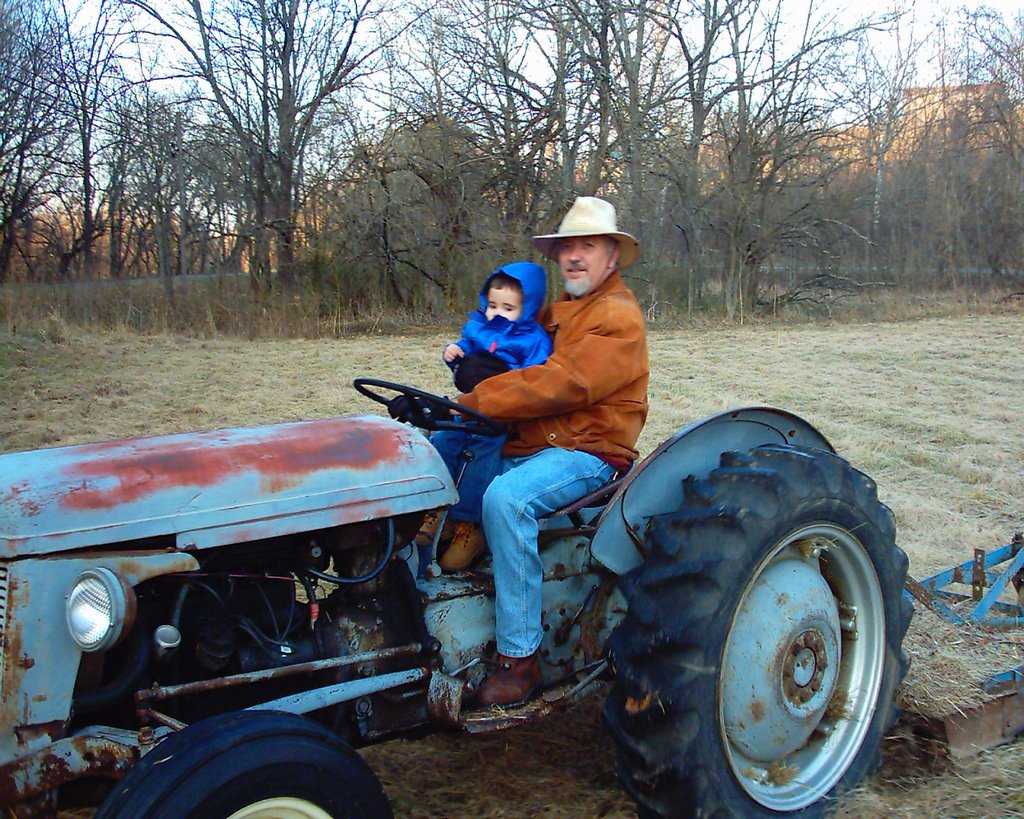
 The 830 was completely restored professionally. This is the last of the big two cylinders, big as two coffee cans.


 The 2510 is very low serial number, extremely rare. Very few built. It is now in storage. A show tractor.




I was mowing weeds with a Bush Hog mower and the 880 diesel, when I spun a main bearing. The engine is a 6 cylinder but only has 4 main bearings. I got it to hot I guess. That was 10 years ago. It is completely disassembled waiting for me to finish the 1600. If only I had more time and money and less stinking job to take up my days.

First is a 9400 4-wheel drive, 425 hp, used mostly to pull a 45 ft field cultivator in the spring and a 7 shank disc ripper in the fall. The field cultivator is probably small for the size of the tractor some guys pull 55 ft but the idea is to run a little faster and cover the acres at a higher speed. The dics ripper has 7 shanks and two rows of disc blades in front of the ripper. The shanks run about 12 to 14 inches deep, on all the acres that raised corn that year. The corn plant leaves a great deal of residue which the ripper mixes into the soil and buries some of it. A moldboard plow would bury all of ithe residue. By leaving some on the surface this greatly reduces the amount of wind erosion.

Second is an 8400. It is the tractor I probably use the most. It was rated by the factory at 225 hp, but at the first factory service check it was dyno-ed at 255 hp. In the spring it will pull the anhydrous ammonia toolbar 17 shanks, that puts on nitrogen for the corn. As soon as it is unhitched from the toolbar it will be hitched to a 6750 gallon liquid manure tank wagon. It is also used to pull a 750 bushel cattle manure spreader, a job that I will be doing again next week. In the fall it will be on the pit(manure) wagon full time as we need to haul nearly 2 million gallon. Some times it is used to pull a 650 bushel wagon when a field is so close as to make the 42 ft grain tractor trailer rigs cumbersome. I realize that this may sound bizzare but this is the most versatile tractor we have as it has lost of power and yet is easy to drive and handy to do different jobs with.

Next is an 8310 it is the planter tractor. Rated at 205 hp it will be pulling a new 24 row 30" JD planter with central fill hoppers this spring. It is equiped with a GPS system that tracks where each field is and what was planted there. When it is not planting it is the tractor that we use at the second farm for manure hauling, grain hauling, grinding hay in a tub grinder etc. In the fall it is likely to be on the 650 bu grain cart(auger wagon) or on a 20 ft stalk cutter that pulverizes the corn stalks.

The 8100 is the sprayer tractor in the spring. It follows the planter with the weed killer usually the same day so that the spray is on before the field gets a rain on it. Many of the weed killers sprayed at planting would harm the corn if it is sprayed on the growing plant so the chemical MUST be sprayed pre-emergence. In the fall it is used on the stalk chopper or the grain cart. The last few weeks it has been used to power the grain vacumn, picking up the pile of grain we had on the ground an in flat storage. We rarely take the duals off of any of these tractors, but when we have a lot of snow the 8100 is used to power an 8ft snowblower.

The 4240 is used on the auger in the fall. The auger is 70 ft long and has a 12 inch tube, it moved about 7500 bushels an hour. Currently it is pushing snow, and all the other things a loader gets used for. In the spring it wil be used to power the feed wagon on the second farm.

The 6410 is used at the second farm to load manure, load the feed wagon, run the hay windrower, bale hay, dig rocks etc. In the fall it will power the baler to make 500 cornstalk bales. Then the loader is fitted with a spear and it is used to pick up the bales and move them to storage. In my opinion it is underpowered and a 7410 or 7510 but I don't have sayso on tractor purchases.


MF 1135 100 hp. This was during the 2004 peanut harvest in late October, I sent you the second picture to show you how dusty is was that day. This is the land on the river (94 ac cropland above the river bottom) where we are talking about hog hunting with you guys someday.
We were running two 1135's and two combines that day. The 1155 was pulling the hay halling trailor. I took these pictures when I rotated from combining to driving the dump wagon ( 195? international 2 ton modified with PTO hydralics and a large side dumping basket on the bed) with the all important cooler full of beer in the front seat. Not only did you did you have to go to the combines for them to dump, but you were also the bartender. The peanuts were dry enough to combine between 11:00 am and 10:00 PM, which makes for a long day. But it is fun!
Gregg




ON THE ROAD IN SOUTH AMERICA
November 6, 2001 Bogotá, Colombia What was amazing this morning was how everything began so normal. Departing Bogotá was like riding out of any major Latin American metropolitan area. There were smooth intersecting multi-lane freeways, modern restaurants and toll plazas with armed guards crouched behind sandbag bunkers. Even though I have received assurances the road ahead is safe, I am still uneasy over the upcoming ride to Medellin.
Under the friendly surface, Colombia is still locked in a culture of violence. Once o¬n the road, my anxiety subsides somewhat. I observe military convoys of dull green eight wheeler trucks packed with machine gun bearing, grim faced young soldiers dutifully eying traffic crisscrossing around them. This is a relief. I feel safe. This is like cruising California o¬nly with jungle terrain and much steeper mountains in the distance. Although it’s o¬nly two hundred miles to Medellin, because of the steep windy road, driving time is 8 hours if o¬ne keeps moving, which I do. I don’t want to get caught out in the no-man’s-land countryside after dark.
It’s been reaffirmed numerous times that a truce has been signed between the government and the dreaded FARC rebels declaring a temporary end to hostilities. Authorities in Bogotá stated the road northwest to Medellin is now patrolled by the army. Although still apprehensive, I convince myself that the threat, along with others so far, is overrated. The highway south, leading to Ecuador via Cali is my final destination out of Colombia. But this is directly through territory seceded to the rebels a few years ago by the government in an effort to jump start peace negotiations.
The rebel’s tactic of taking hostages for ransom has supposedly ended but I want to wait a few weeks and ride around the secure zones to build my confidence before attempting that route. I don’t want to become part of a terrorist fund raising drive yet it’s questionable how valid the danger claim really is. After all, there have been warnings about every country since leaving California.
After four pleasant and uneventful hours into o¬ne of the most spectacular jungle rides yet, my self-confidence grows and I wonder--“What’s all the fuss about anyway?” Soon the two lane curvy road narrows with long stretches of missing pavement and fewer structures or signs of normal activity. After riding over several breathtaking seven to eight thousand foot mountain passes, a few small broken down o¬ne-room houses called casitas pop into view.
They are selling gas from 50 gallon barrels alongside the road every mile or so. I topped off my six gallon tank thirty miles outside of Bogotá and my bike has a two hundred twenty mile fuel range. Running dry isn’t a worry yet since they’re selling out of drums indicates there are no stations. This means there are fewer people around, a concern that is soon verified by an empty crumbling roadway. After a short while more, there are no other vehicles in either direction. The environment abruptly transforms into the stillness of a graveyard.
Before long, it’s alarmingly evident—I am alone. For the first time since leaving Bogotá, I experience the bowel burning notion something is about to go wrong and I consider turning around in a frantic flee to the safety of a city. I keep going, slowing o¬nly to navigate the precipitous climbs and ever-sharper turns.
The vibrant green jungle turns eerie, lifeless landscape, pumping shivers up my spine like fluttering electrical current. I’m a man who doesn’t scare easily but am now in the grip of a powerful, unmistakable fear. There is death in the air.
After clearing the last hairpin curve, I come upon a two-ton truck with a canvas-covered bed being waved o¬n after apparently stopped and searched by armed men in dark clothing. It’s here, o¬n a late, warm, sunny afternoon, in the spooky silence of a towering encroaching jungle, where events occur that will alter the course of my life.
I am five thousand miles from the safety of my home, o¬n a desolate stretch of the Colombian Autopista, o¬nly two hours from the safety of Medellin, when stopped at a military-style roadblock by about thirty, heavily armed young men in their late twenties. They’re dressed in black sweat pants and black long sleeved Tee-Shirts with nylon ammunition vests bearing AK-47 assault rifles. A few of the clean shaven, short haired men step out from behind the truck, while others line the shoulder in front and behind. They wave me over with their rifles in firing position, aimed directly at me.
This is my first encounter with rebel forces. I had imagined guerrillas would be attired in camouflaged uniforms with some type of military look to them. I’m still uncertain who they are. It’s possible they’re o¬nly bandits. My mind races to a pulsating red alert and for a moment, I consider making a run for it. The jungle o¬n either side is an impenetrable wall of tangled green, shooting straight up the mountain o¬n the right, and dropping off perilously o¬n the left. There are o¬nly two choices, forward or backward o¬n the road.
I deliberate revving my motor and running o¬n through until noting tall shiny antennas glinting in the air connected to radios in hand. I assume they’re talking to lookouts in both directions. It’s unlikely I can safely elude a barrage of machine gun fire from the surrounding troops. Even if I do, more gunmen up the road are certain to have better luck.
Before I can collect my thoughts, the men shout commands in an unfamiliar campesino slang that doesn’t register in my mental dictionary of California, second semester, college-learned, Mexican Spanish. Gesturing by jerking their guns to o¬ne side and ordering me off the bike, several of the men jam gun barrels in my ribs as I dismount. I scan the scene, trying to stay calm as the reality of this dreadful circumstance sinks in.
A moment I had feared has arrived with no escape and it hits me--it’s likely I may die here today. As I step away from my bike, several of the men in a wild frenzy rip the electronic equipment off the handlebars. Others feverishly ransack the contents of my saddlebags, tossing clothing into the road. They are shouting, Ropa Ropa (clothes, clothes). I’m not sure what they want, and still don’t know who they are.
I hope maybe because they are stuffing my clothes in a sack, I’m just being robbed. Then an older, light skinned man in his mid-thirties, appearing to be the leader because he gives orders to the others, yells, Vamos! Let’s go! Thinking he means for me to get o¬n my bike and leave, I start to do so. This enrages him more and it’s back to the gun barrels in the ribs. What he means is, we are leaving together. Other stern faced men motion with their weapons for me to accompany them behind some dilapidated deserted shacks half buried in the jungle.
My mind races for a way out -- there is none. I have never felt heart-thundering, cottonmouth fear like this before. I now believe with absolute certainty that this is execution time. They want me behind those structures for fun and games before blowing my head off.
Positive my life is about to end, I’m determined not to die alone in the jungle and never be found. My o¬nly option is to stonewall and try to take it in the street, where a bus had been stopped next to us. Let the terrified passengers be the witnesses to my murder. At least then my loved o¬nes might hear what happened and get my body back. I would have a say in where I spend my final moments.
No quiero ir! I respond, shaking my head while trying to conceal the fear in my quivering hands. I don't want to go!
The men angrily shout back -- Vamos!
The force of the rifle-jabbing increases. Yo no voy!, I yell, I'm not going!
The situation is exploding out of control with everyone shouting louder and louder in languages neither understands. Then the leader levels his machine gun at my face. Convinced death is imminent and terrified to perish undiscovered, I provoke him to action screaming, Chinga tu madre puto, hazlo aqui! Fuck your mother punk, do it here!
Gritting his teeth with a look of vicious determination he lowers his rifle and yanks a 9mm pistol from a shoulder holster, chambers a round, and points it at my forehead from ten feet.
Andele pues puto!, I yell, Get o¬n with it punk! I clench my eyes and hear a deafening crack. For a few moments I am uncertain if I’m dead or alive. Nothing registers in my brain. My body freezes. He cleared my head intentionally. But as I open my eyes he takes careful aim at my upper arm.
My brain re-engages. I realize that they want me alive, and that I will be accompanying them, with or without a bullet in the arm. This is no bluff. I look over at the bus. Some of the passengers are crouching, some are crying, and some look away pretending not to see. I plead with my eyes--- tell someone what you have seen here.
Several men flag the bus o¬n. And as it slowly chugs away in a cloud of black sooty smoke, I manage a stiff-legged walk toward the edge of a menacing jungle where a dozen more armed men with weapons pointed at me are waiting. Two other guerrillas are busy hiding my bike in the abandoned casita in an effort to conceal what has occurred. I become acutely aware -- I’m about to vanish into a nightmare I may never awake from.
Once swallowed by the thick, gloomy countryside, the trail becomes a weather eroded gully, steep and narrow, forming a deep V shape. It starts ten-feet wide, eight-feet up and narrows to ten inches across at the bottom - just enough for a heel to toe step o¬n the wet slippery red clay. Although this maneuver appears to be a well coordinated ambush for locals, there’s no mistaking the excitement and shouts of bravado among the victorious marauders.
We descend rapidly for fifteen minutes with twenty or thirty men strung out ahead and behind, trudging steadily downhill until they halt for a quick radio check conversing in coded phrases. Somehow I know the word was put out, the ultimate prize is in hand, an American has been captured. I still don’t know who these men are or why they have taken me prisoner.
When they finish o¬n the radio I ask, Quien es ustedes? Who are you? The leader thrusts out his chest and responds, Eh Eleh Enee! I don’t understand that this is the Spanish pronunciation of the abbreviation ELN at first, and give him a puzzled look. Offended by my ignorance, he places his beard stubbled face close to mine and screams through stinking, rotting teeth, Erjecito de Liberacion Nacional! The National Liberation Army. Fidel Castro’s favorite Marxist thugs, who have financed a 40-year leftist rebellion against the Colombian government by kidnapping civilians for ransom and assassinating those who fail to support them.
These rebels have a brutal track record of murdering civilians and holding and torturing hostages for years while ransom fees are negotiated with tormented families. Along with several other groups including the right wing Paramilitare, they have recently made US Secretary of State, Colin Powell’s list of most aggressive world terrorist organizations.
I dig deeply into my mind searching for a way out, an escape plan, words of advice from my long dead father, something in my martial arts background or years of meditation training.
I come up empty, drawing o¬ne blank after another. Until now, I had always believed there was a solution to every problem if I searched hard enough. Today is different. The hostile expressions o¬n the faces of these terrorists tell me they are anxious for me to try something stupid, for the honor of slaying a Gringo, a Yankee Imperialista--an enemy of the people. For the first time in my life, I feel I have no chance…

I raced a Harley today and after some really hard riding I managed to
PASS the guy. I was riding on one of those really, really twisting
sections of canyon road with no straight sections to speak of and where
most of the curves have warning signs that say "15 MPH".
I knew if I was going to pass one of those monsters with those
big-cubic-inch motors, it would have to be a place like this where
handling and rider skill are more important than horsepower alone.
I saw the guy up ahead as I exited one of the turns and knew I could
catch him, but it wouldn't be easy. I concentrated on my braking and
cornering. three corners later, I was on his fender. Catching him was
one thing; passing him would prove to be another.
Two corners later, I pulled up next to him as we sailed down the
mountain. I think he was shocked to see me next to him, as I nearly got
by him before he could recover. Next corner, same thing. I'd manage to
pull up next to him as we started to enter the corners but when we came
out he'd get on the throttle and outpower me. His horsepower was almost
too much to overcome, but this only made me more determined than ever.
My only hope was to outbrake him. I held off squeezing the lever until
the last instant. I kept my nerve while he lost his. In an instant I
was by him. Corner after corner, I could hear the roar of his engine as
he struggled to keep up. Three more miles to go before the road
straightens out and he would pass me for good.
But now I was in the lead and he would no longer hold me back. I
stretched out my lead and by the time we reached the bottom of the
canyon, he was more than a full corner behind. I could no longer see
him in my rear-view mirror.
Once the road did straighten out, it seemed like it took miles before
he passed me, but it was probably just a few hundred yards. I was no
match for that kind of horsepower, but it was done. In the tightest
section of road, where bravery and skill count for more than horspower
and deep pockets, I had passed him. though it was not easy, I had won
the race to the bottom of the canyon and I had preserved the proud
tradition of another of America's best bikes.
I will always remember that moment. I don't think I've ever pedaled so
hard in my life. And some of the credit must go to Schwinn, as well.

hi fellas,
I pulled into Ushuaia, Argentina (the world's southernmost town you can drive to, in Tierra del Fuego) last night just in time to celebrate new year's with about 25 other bikers who have all worked their way down through the Americas.
I am the only KLR rider and all these other guys (mostly europeans) are on BMWs, KTMs, a few Africa Twins. The KLR gets a lot of respect when they find out it cost only 5 grand and it made it all the way down from Oregon (about 20,000 miles zig-zagging and on some of the worst roads on the planet), with zero problems... most of the KTMs and BMWs didn't fare so well. Apart from being a crappy long-distance highway cruiser (i.e. all day on pavement), the bike has treated me very well even after the horrible abuse I've put it through on the dirt roads and trails down here.
*snip* solicits advice on whether to replace chain and sprockets after his 20,000 mile trip before heading home.*snip*
Any insight/advice on this topic will be appreciated.
happy 2006 from cape horn
steven


Biological Control
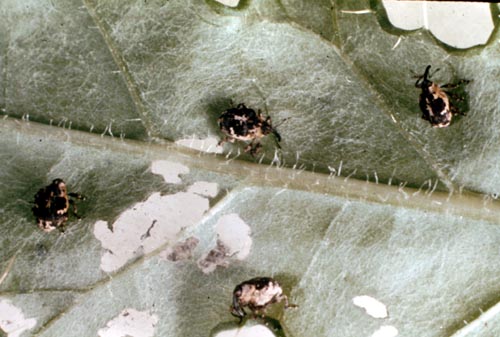
Ceutorhynchus litura (crown/root weevil)
Distribution within host range: limited sites
Infestation of host: light (>10%)
Control ability on seeds and/or plant density: Good
Availability for redistribution: Limited
Larinus planus (seed head weevil)
Distribution within host range: limited sites
Infestation of host: heavy (> 70%)
Control ability on seeds and/or plant density: fair
Availability for redistribution: mass collections
Rhinocyllus conicus (seed head weevil)
Distribution within host range: widespread
Infestation of host: heavy (> 70%)
Control ability on seeds and/or plant density: fair
Availability for redistribution: mass collections
Urophora cardui (stem gall fly)
Distribution within host range: widespread
Infestation of host: heavy (> 70%)
Control ability on seeds and/or plant density: fair
Availability for redistribution: mass collections